
Bowling Tips for Beginners
Pick the right ball, roll it smoothly, aim at the arrows and know the score.
Learn How to BowlBowling Tips for Beginners
New to bowling, or rusty after years away? These bowling tips for beginners cover the handful of things that make the biggest difference: picking the right ball, a simple four-step approach, aiming at the arrows instead of the pins, and knowing how scoring actually works. You don’t need a fancy hook to have fun — or to bowl a respectable score.
The Five Tips That Help Most
1. Use the right ball
A ball that is too heavy wrecks your swing; one with holes that are too big makes you squeeze. See ball weight and fit.
2. Aim at the arrows
The pins are 60 feet away. The arrows on the lane are much closer and far easier to hit. Pick one and roll over it.
3. Walk, don’t run
A smooth, unhurried four-step approach beats a fast one every time. Speed comes from the swing, not your legs.
4. Let the arm swing
Think of your arm as a pendulum. Push the ball out, let gravity bring it back and through, and release low at the line.
5. Pick up your spares
Strikes are exciting, but spares build scores. A one-pin spare is worth learning first; see strikes and spares.
6. Learn the scoring
Knowing why a strike is worth more than ten pins changes how you play the late frames. Try our bowling scoring calculator.
How to Bowl, in One Minute
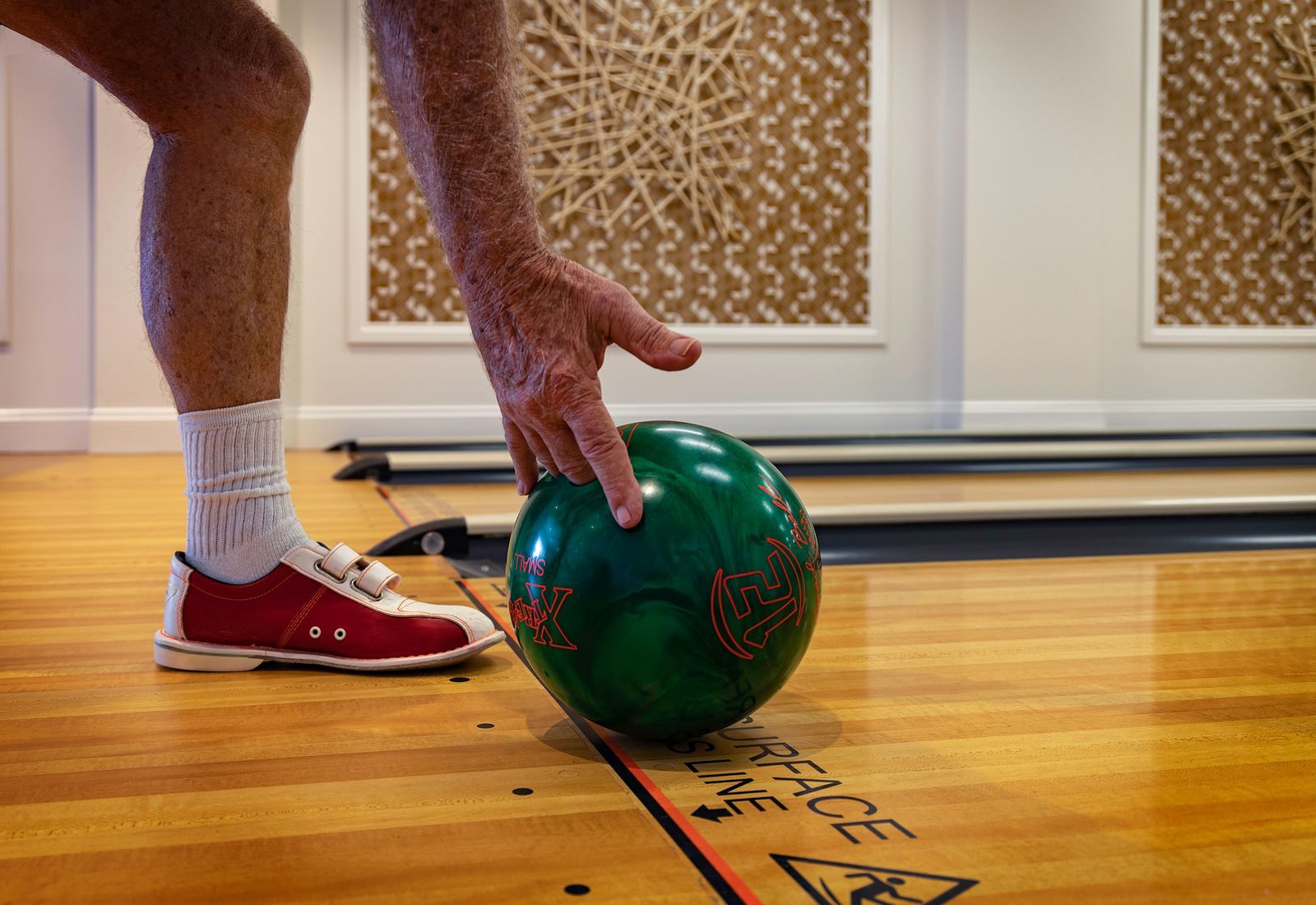
Stand four and a half steps back from the foul line, ball held at waist height, eyes on your target arrow. Step off with the foot on the same side as your bowling hand (right foot for right-handers). As you take that first step, push the ball forward; on the second step it swings down; on the third it swings back; on the fourth step you slide toward the line as the ball swings through and leaves your hand just past your sliding foot. Finish with your arm reaching toward your target, like a handshake.
That’s the whole motion. Our how to bowl guide breaks each step down, with the common mistakes and how to fix them.
Understanding the Scoreboard
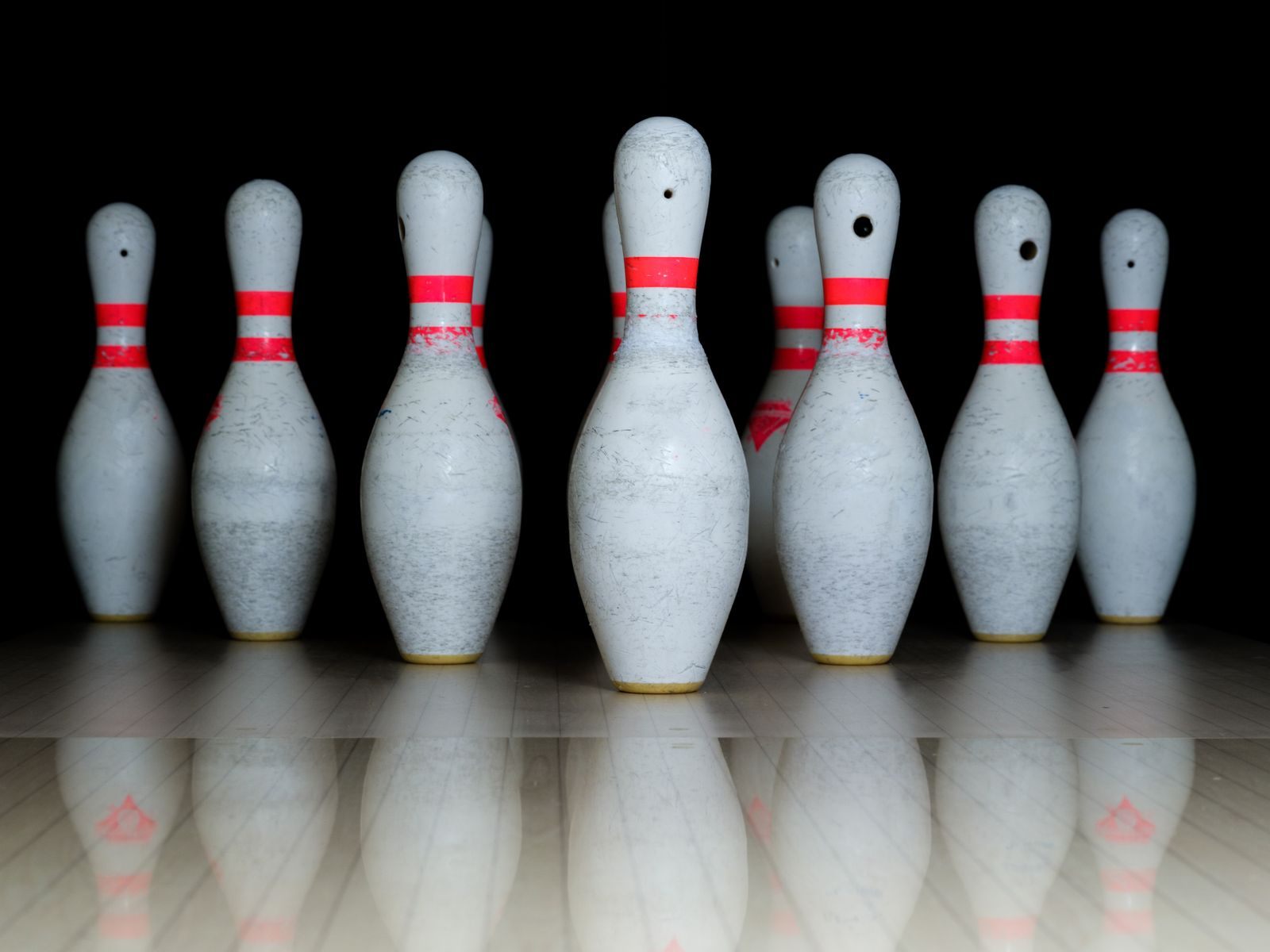
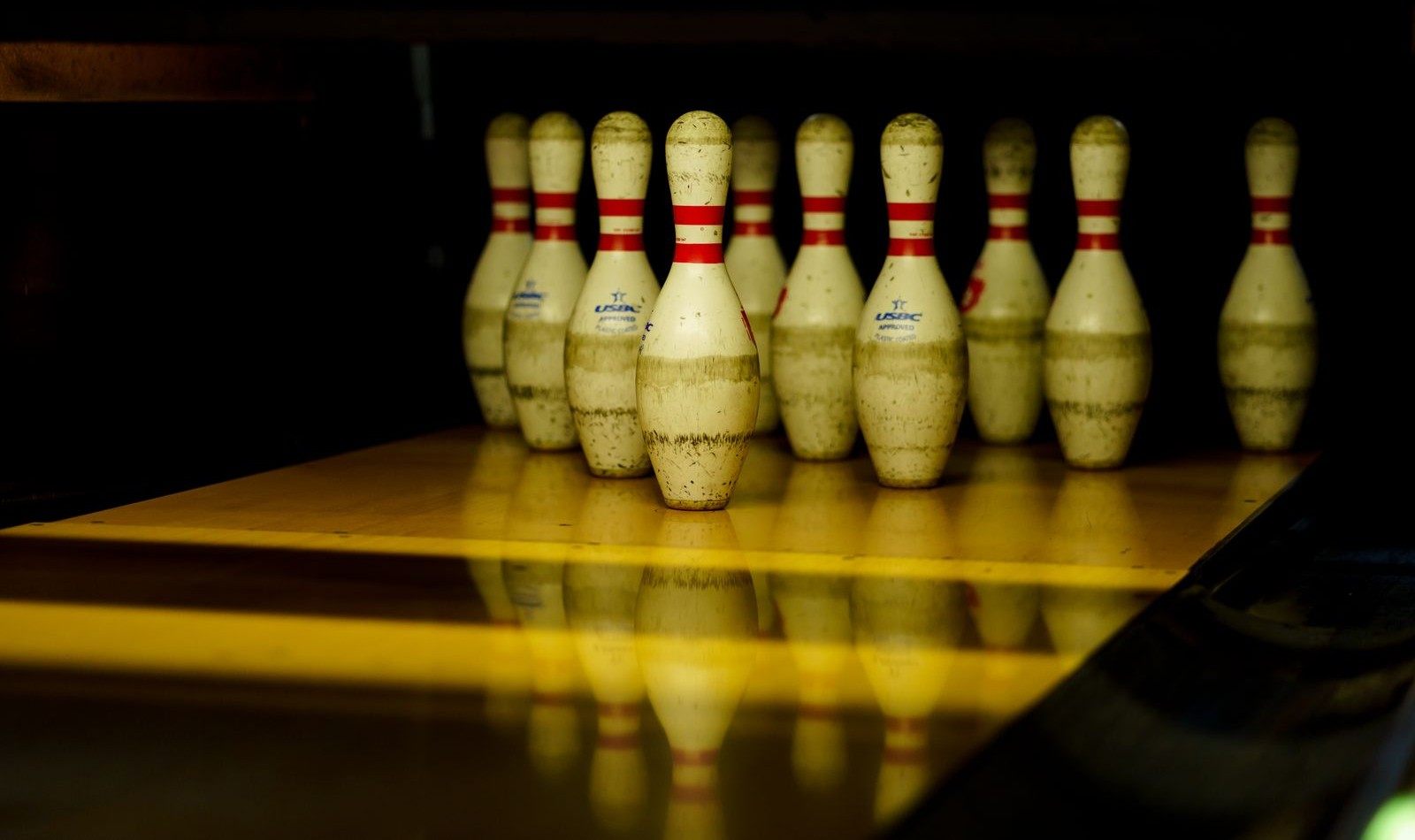
Automatic scoring does the math for you, but the bowling scoring system is worth understanding. A strike is worth 10 plus whatever you knock down with your next two balls, and a spare is worth 10 plus your next ball. That is why three strikes in a row (a “turkey”) adds up so quickly, and why a perfect game of 12 straight strikes is 300. Walk through a full example game, frame by frame, on our scoring page — it includes a free scoring calculator for paper scoresheets.

More Bowling Tips to Improve Your Game
- Keep your eyes on your target arrow until the ball has passed it. Looking up at the pins early pulls your shoulder off line.
- Start in the same spot every time. Use the dots on the approach to mark where your sliding foot finishes.
- If the ball keeps missing in the same direction, move your feet, not your target: miss left, move left; miss right, move right (for right-handers).
- Bowl a little slower than you think. Accuracy beats speed for beginners.
- Bowl more than one game. Your timing usually improves in the second and third games.
- Join a league or take a lesson. A coach can spot a habit in one frame that would take you months to find on your own.
Where to Bowl
Most towns of any size have a bowling center, and many host open play, leagues, youth programs and birthday parties. The Best of the USA directory lists local businesses across the country, and the United States Bowling Congress (USBC) is the national governing body for the sport, with rules, youth programs and league information. When you’re ready for more than a casual game, read about bowling parties and leagues. If you grew up in New England or the mid-Atlantic, you may know the small-ball versions too — see duckpin and candlepin bowling.
Beginner Questions
What weight bowling ball should a beginner use?
Pick the heaviest ball you can swing comfortably for a whole game without your arm tiring or your wrist bending. A common rule of thumb is roughly 10 percent of your body weight, capped at 16 pounds, but comfort and control matter more than the number.
How many frames are in a game of bowling?
Ten. Each frame gives you up to two balls to knock down all ten pins, and the tenth frame can give you a third ball if you strike or spare.
What is a good bowling score for a beginner?
There is no official benchmark. Most beginners are happy to beat their last game. Picking up easy spares is the fastest way to raise your score, even before you throw many strikes.
Do I need my own bowling shoes?
No. Centers rent shoes, and you must wear bowling shoes on the approach because street shoes can damage it and carry grit that makes other bowlers slip.
Learn the Approach Step by Step
Stance, four-step approach, pendulum swing, release and follow-through, plus fixes for the most common beginner mistakes.
Read How to Bowl